
Start with the right resin
The single biggest factor in a good result is using a resin made for the job. Craft and art resins are formulated for a clear, glossy finish, a sensible working time and taking colour well. Industrial or repair epoxies behave very differently and will disappoint if used for art.
For a first project, a straightforward coating or casting craft resin is ideal. Tell us what you want to make and we will point you to a beginner-friendly option.
The kit you need
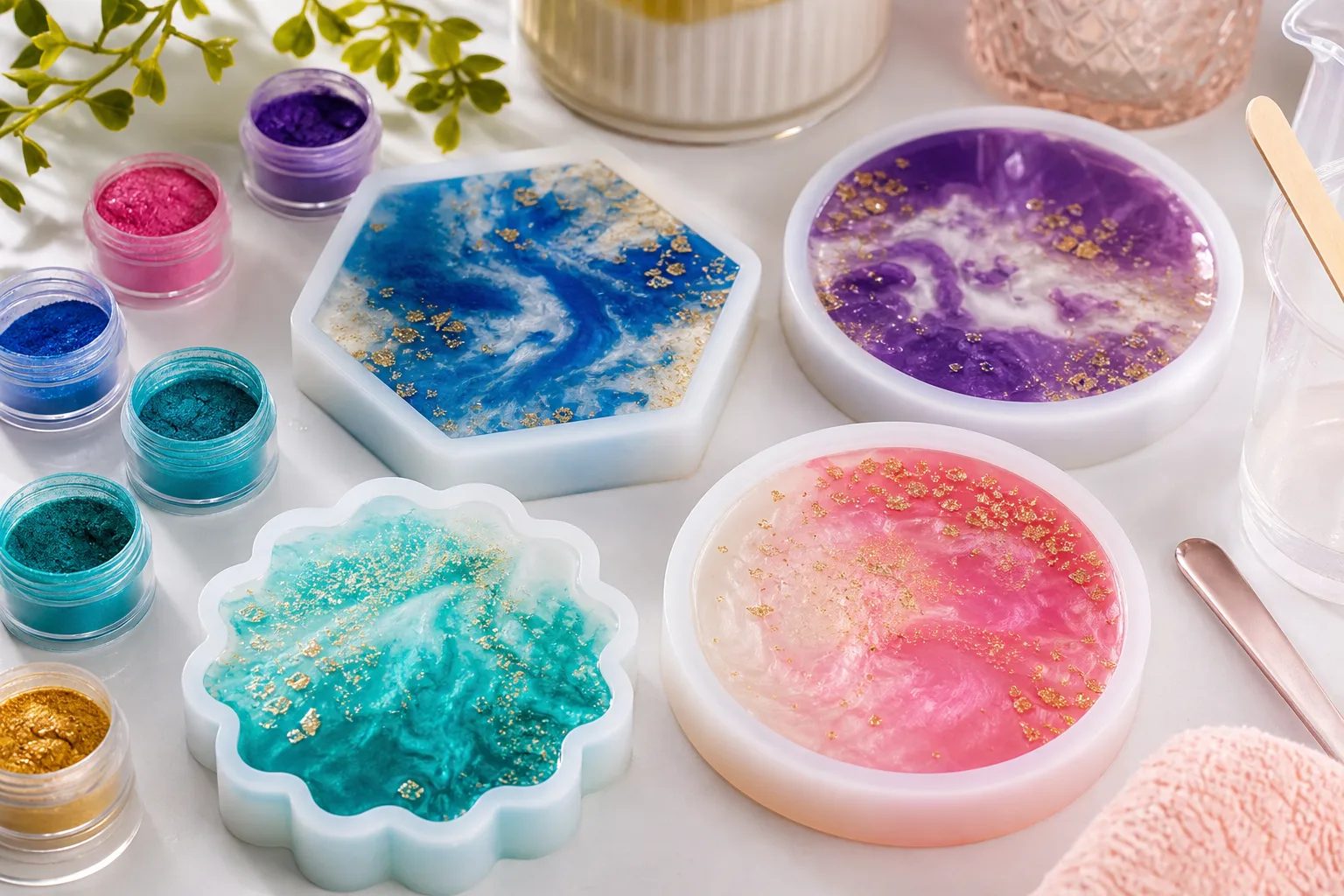
You do not need much to begin, but a few basics make all the difference:
- Craft resin and hardener suited to beginners
- Silicone moulds, such as coasters or a tray
- Pigments, mica powders or alcohol inks for colour
- Graduated mixing cups and stirring sticks
- Nitrile gloves and a protected, level work surface
- Something to pop bubbles, like a suitable heat source used carefully
Mixing and pouring
Resin cures through a chemical reaction, so the mixing ratio matters. Measure the resin and hardener accurately to the manufacturer instructions and mix thoroughly, scraping the sides and base of the cup, until completely combined. Rushed or uneven mixing is the most common cause of a sticky, soft or patchy cure.
Add colour sparingly, pour into your mould, and work on a level surface. Bubbles will rise on their own, and a gentle pass with a suitable heat source helps release them. Then leave it well alone to cure for the full recommended time.
Simple first projects
Coasters are the classic starting point: small, forgiving and quick to see a result. Trinket trays, keyrings and simple keepsakes are good next steps. Once you are comfortable with mixing, colouring and curing, you can move on to deeper casts and more ambitious pieces.
When you are ready to restock or scale up, we supply resin, pigments, moulds and consumables in larger quantities too, so your supply can grow with your hobby.