
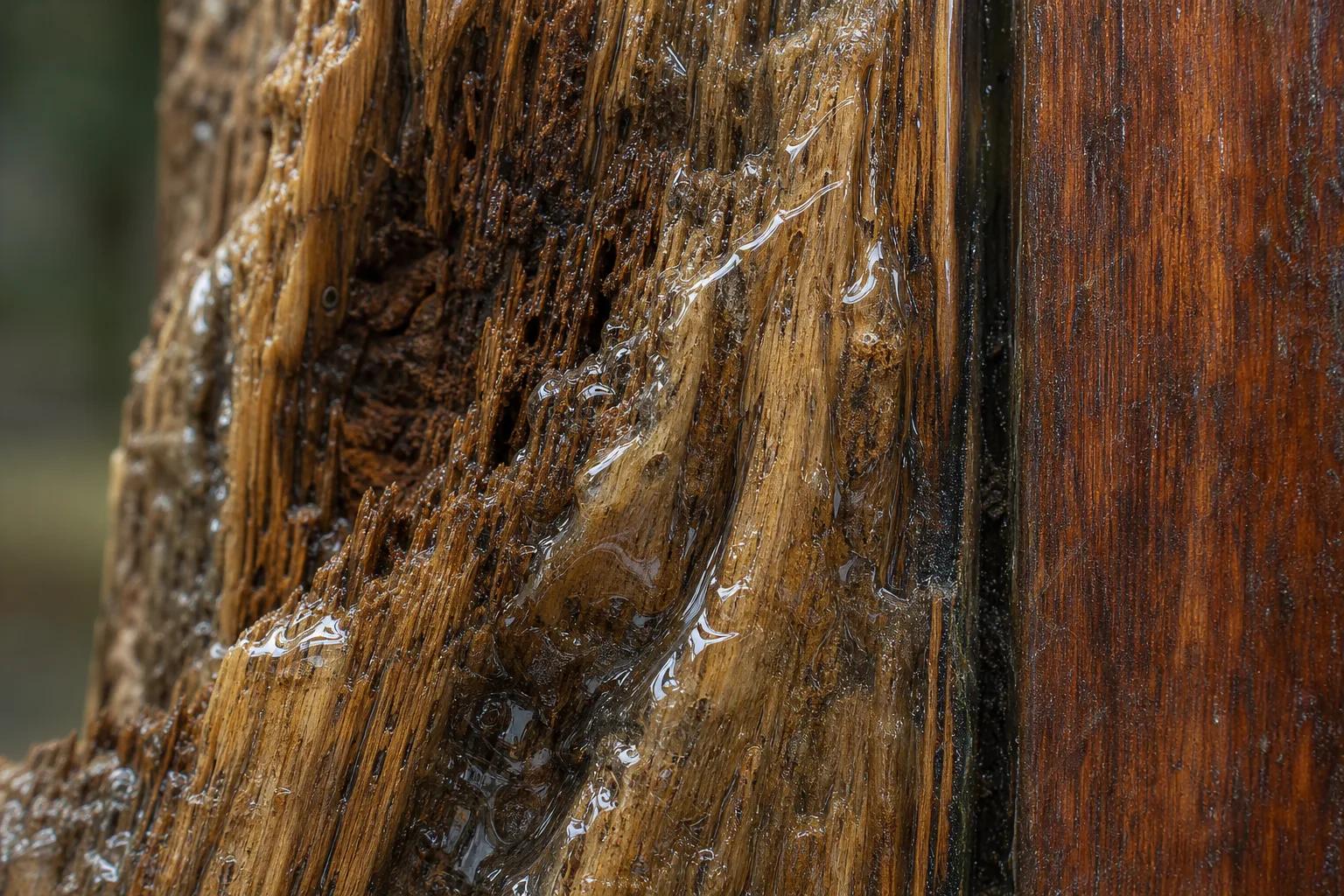
What causes wood rot
Wood rot is caused by moisture. When timber stays damp, fungi break down the fibres, leaving the wood soft, spongy, discoloured and structurally weak. Left unchecked it spreads, and it will not hold paint, fixings or load.
The two broad types are wet rot, which stays close to the damp source, and dry rot, which can spread further through masonry and timber. Either way, the first job in any repair is to deal with the moisture that caused it, otherwise the problem simply returns.
How epoxy repair works
Epoxy repair uses two products that work together. A low-viscosity wood consolidant is applied first. It soaks deep into the weakened, porous fibres and cures hard, effectively gluing the damaged wood back into a solid mass from the inside.
Once the consolidant has cured, a thicker epoxy filler is used to rebuild the missing profile, filling holes and reshaping edges or mouldings. After curing, the filler can be sanded, planed, drilled and painted, so the repair blends into the surrounding timber.
- Remove loose, crumbling material and let the timber dry out
- Treat and address the source of the damp
- Apply consolidant to harden the remaining sound fibres
- Rebuild the missing section with epoxy filler
- Sand to shape, then prime and paint to match
Repair or replace?
Epoxy repair shines where damage is localised and there is still sound timber to bond to, such as window sills, door frames, thresholds and decorative joinery you would rather keep. The repair is strong, discreet and far less disruptive than a full replacement.
Where rot has spread through most of a structural member, or the timber is failing across its whole section, replacement is the safer route. If you are not sure which camp your job falls into, it is worth asking before you start.
Getting a lasting result
The durability of an epoxy repair comes down to preparation. Clean, dry timber, the damp source resolved, the right products applied in the right order, and a proper paint or sealer finish to keep water out. Done this way, a repair can last for many years.
If you would rather not tackle it yourself, we carry out epoxy timber repairs, and we also supply the consolidants and fillers along with practical advice if you want to do it yourself.