
What a resin-bound path is
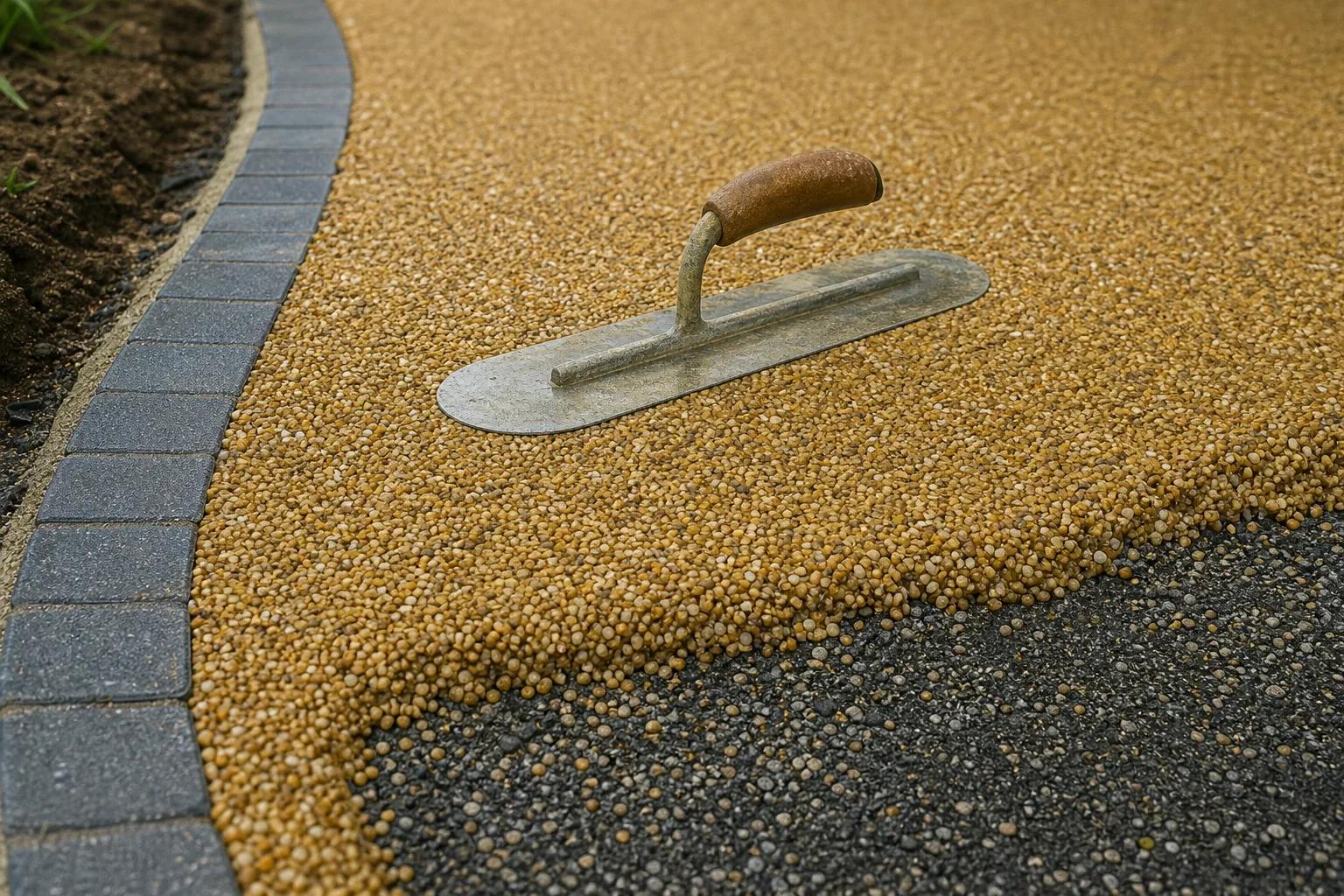
A resin-bound surface is made by thoroughly mixing dried natural aggregate with a clear resin, then trowelling it out to an even depth over a prepared base. The resin coats every stone and binds the whole lot into a smooth, seamless surface with no loose gravel.
Because the mix is laid with small voids between the stones, it is permeable: rainwater drains straight through the surface rather than pooling on top or running off, which is a real advantage on paths and patios.
Why the base is everything
A resin-bound surface is only as good as what it sits on. It is a wearing surface, not a structural one, so it needs a sound, stable, free-draining base beneath it, typically a suitable permeable sub-base or an existing surface that is in good condition.
If the base moves, cracks or holds water, the finish on top will suffer. This is why a proper assessment of what is already there, and preparation where needed, matters more than any other single step.
- Assess and prepare a sound, free-draining base
- Make sure the area drains and edges are defined
- Mix aggregate and resin thoroughly in the right ratio
- Trowel out to an even depth while workable
- Allow to cure fully before use
The laying process
Once the base is ready, the resin and hardener are mixed, then combined with the aggregate in a forced-action mixer until every stone is coated. Working time is limited, so the mixed material is laid and trowelled smooth promptly before it begins to cure.
Weather matters. Resin-bound surfacing is best laid in dry conditions within a sensible temperature range, as damp and cold affect both the mix and the cure. After laying, the surface is left to cure before foot traffic.
Is it right for your project?
Resin-bound surfacing suits garden paths, patios and walked-on areas very well. Driveways carry heavier vehicle loads and need a base and specification to match, so those should always be assessed on their own terms.
If you are weighing up a resin path, tell us about the area, how it is used and what is there now. We will give you a straight answer on whether it is the right choice and what the groundwork would involve.